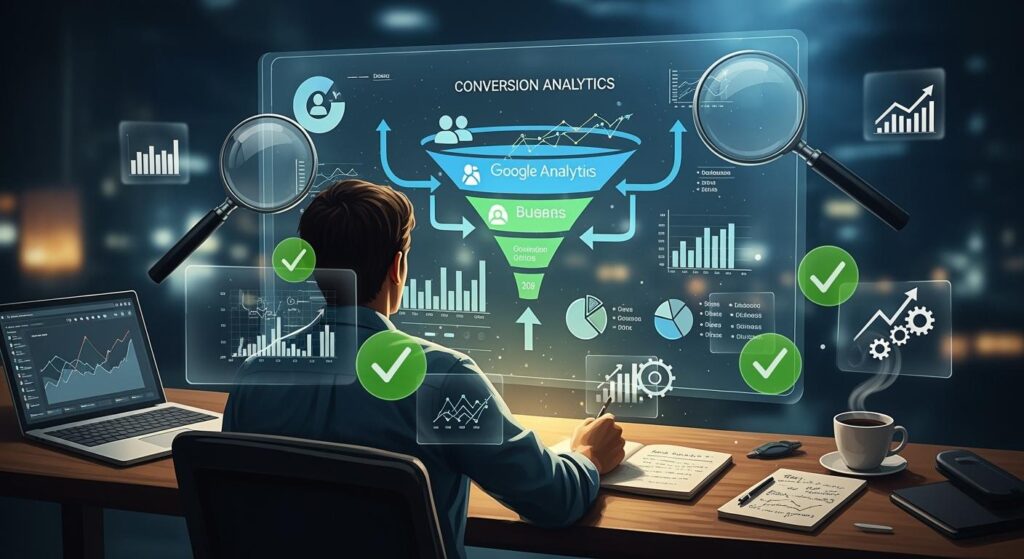
What exactly are marketing personas and buyer personas? In reality, these two terms refer to the same concept. In marketing, it's simply a semi-realistic representation of your ideal customer's profile. There's no magic bullet for developing this profile. You'll need to rely on tangible data, such as studies and interviews. After this in-depth research, you'll better understand their motivations and purchasing habits. But how does this work in practice in B2B? Stay with us to find out, and ask yourself the right questions!
1. Who actually needs your product?
To choose a B2B target audience that will actually consume your goods and services, develop your offers carefully! In fact, the mistake would be to offer a product "just like that" in the hope that customers will come to you on their own. Sure, some curious individuals might try it out. But in the long run, this is not a viable strategy at all. What should you do instead? Thoroughly understand what you are offering and how it will help your customers solve their problems.
In practice, you should proceed as follows! Start by listing the main features of your product. Then, highlight the advantages of each one. For example, a provider of analytics software offers automated. The advantages? First, you will reduce your operating costs. Second, you will save valuable time for your core business. Finally, switching to automated services will ensure a good return on investment.
Once you've compiled this list, determine who will primarily benefit from these advantages. In our example below, this would be busy companies that don't have the time to spend extensively searching through their data. If you're looking to find clients right away, Magileads already has a database for that purpose.
2. Do you know your current customers well?
It's best to start with information you already know. In this case, turn to your current customers! Who are the people who already buy from you? Do they have anything in common?
You can get to know your customers in various ways. By talking to them and conducting surveys, you can gather more information about them. Unfortunately, the information collected could be biased. To compensate for this, look instead at your sales data, CRM, and so on.
But what's the point here? Essentially, you need to find elements, such as similar characteristics and interests. You'll also need to see if their activities are related in some way. Once you've compiled a list of similarities, you'll know which clients are the most profitable.
3. Who are your competitors?
Once you know who your main customers are, look at your competitors! Specifically, identify 3 to 5 of the biggest brands in your sector and determine their marketing persona.
For example, if you are a brand of analytics software, are your rivals targeting small businesses in the financial sector? Are they targeting local service providers, such as florists and hairdressers?
By identifying their target audience, you can tackle a different market. Yes, indeed! You'll have a better chance of success by not targeting the same companies.
4. What matters most to your potential target audience?
After all these steps, do you think you have enough information to define your B2B ? Be careful! Even if this gives an overview of a potential market, you are still far from the end of the tunnel.
Now, you'll need your customers' psychographic data. Simply put, this refers to the more personal characteristics of your target audience. It goes beyond simple demographic information and encompasses values and company culture. This is the only way you'll boost your sales.
Subsequently, you will be able to determine how your product will impact your customers' business or industry.
Have you been able to gather all this information? Great! You're now ready to create your marketing. However, if your database is outdated, you can turn to our Magileads platform. With customer acquisition and retention based in France, we already offer a database of 20,000,000 B2B customers. Now it's your turn!